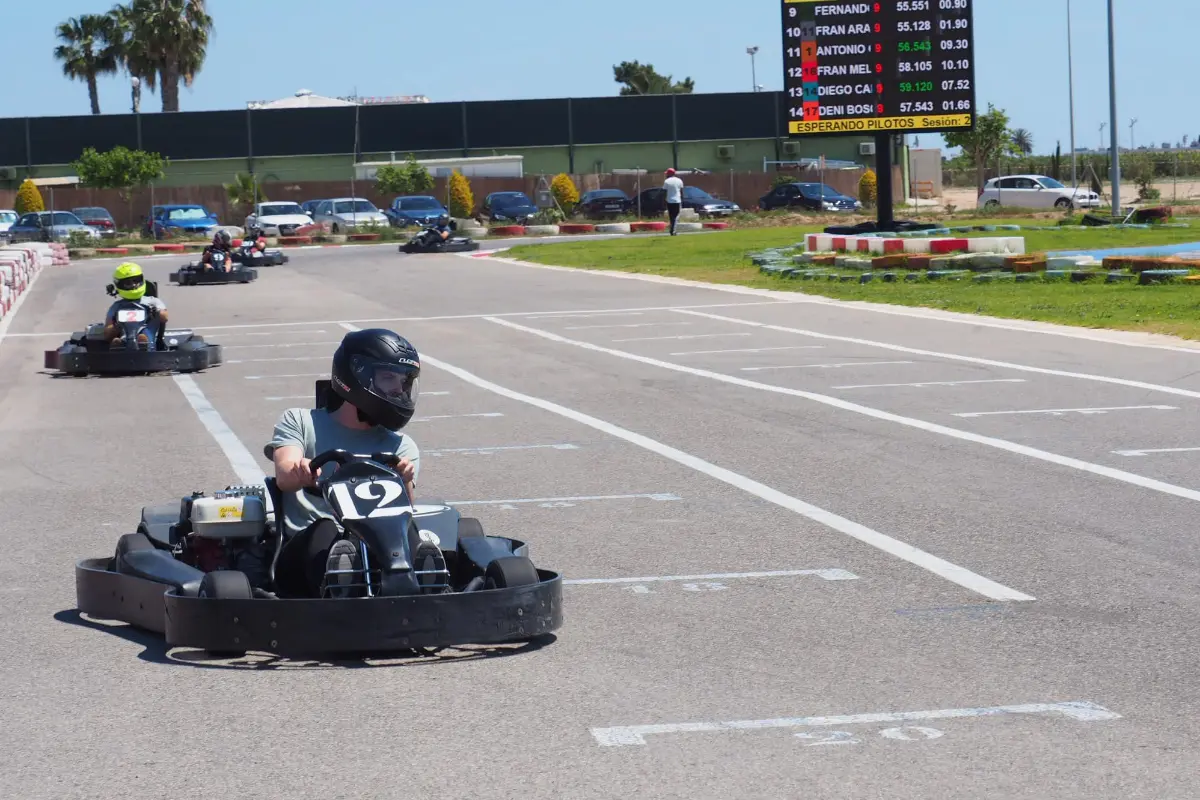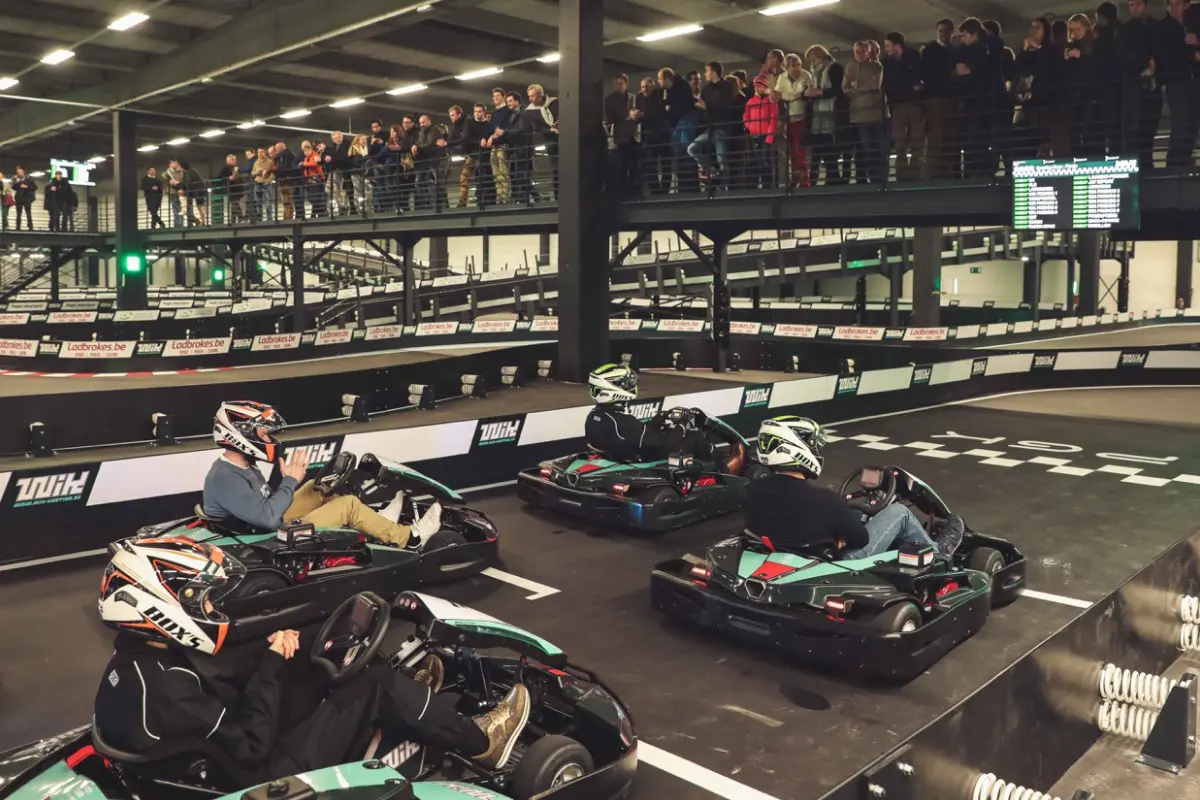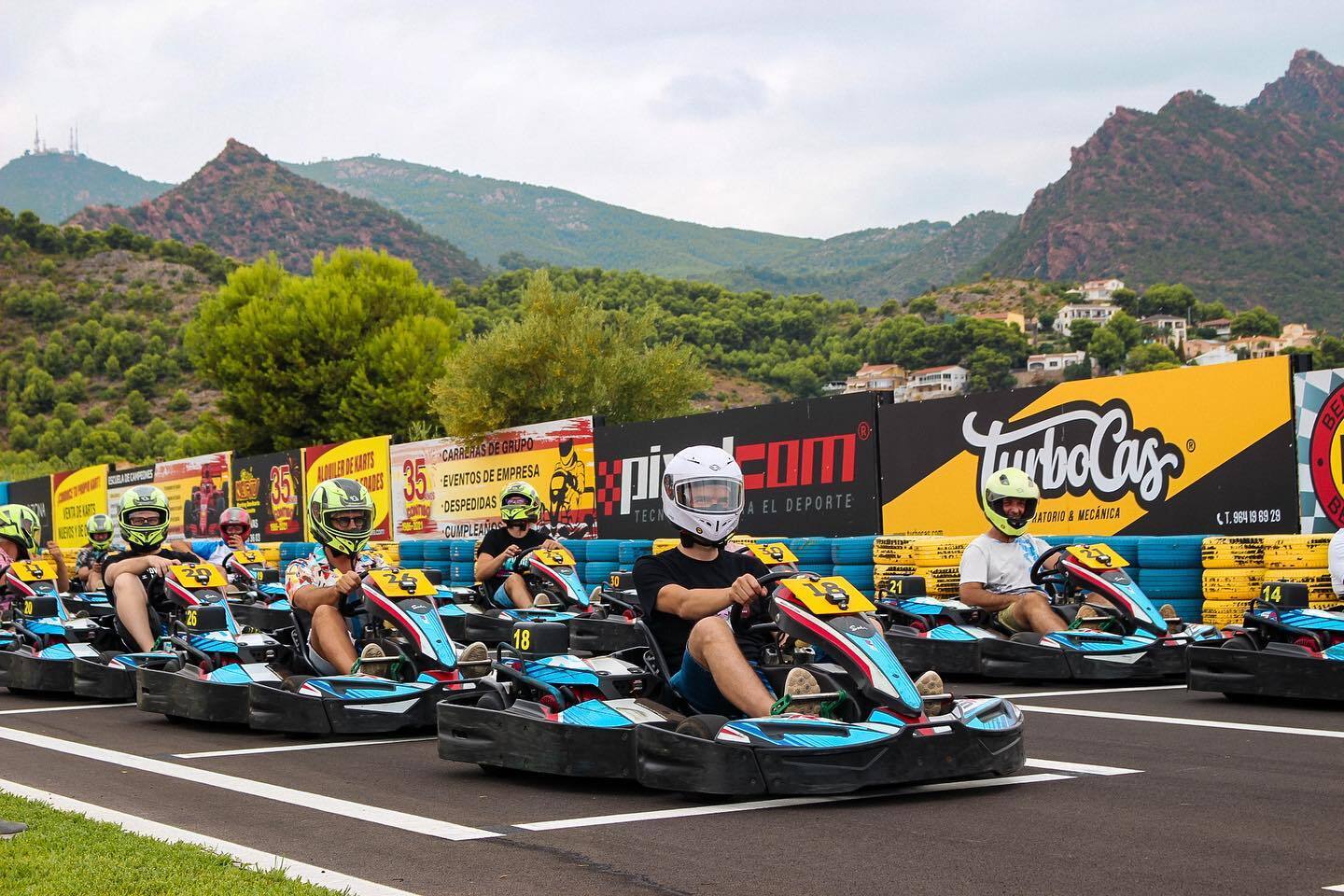
You only lay the asphalt once. If the timing loop, the starting light cables or the power for the lap-time screen weren’t on the plan, they come back later as building work: cutting the track, digging trenches and closing for a few days. Usually just when the bookings have started.
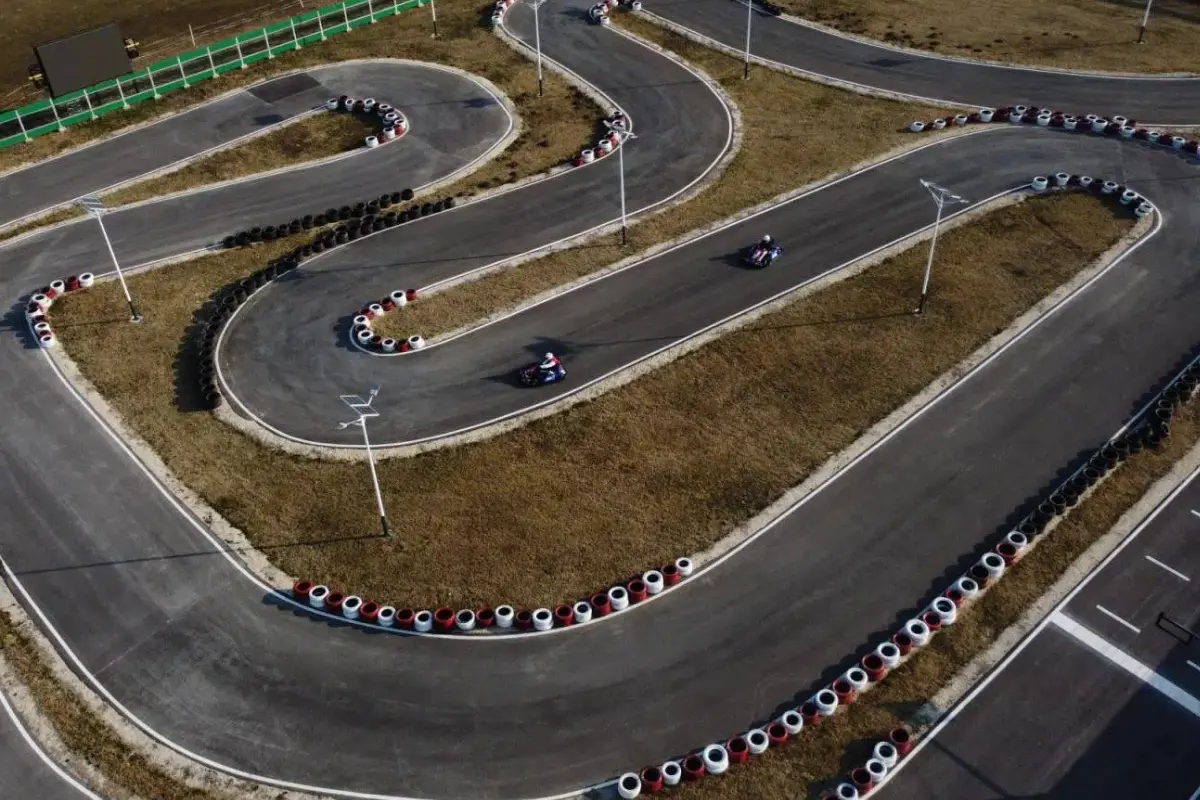
This is not a guide to track layouts or dimensions: it covers the technology to plan when you design a rental go kart track, indoor or outdoor, so everything works from the very first session on opening day.
What technology should you plan in a go kart track design?
In a go kart track design you need to plan six things: timing, signalling, kart speed control, screens, front desk and sales, and the network that connects them. Each one needs something physical on the plan: a duct, a power point, a mounting point or space at reception.
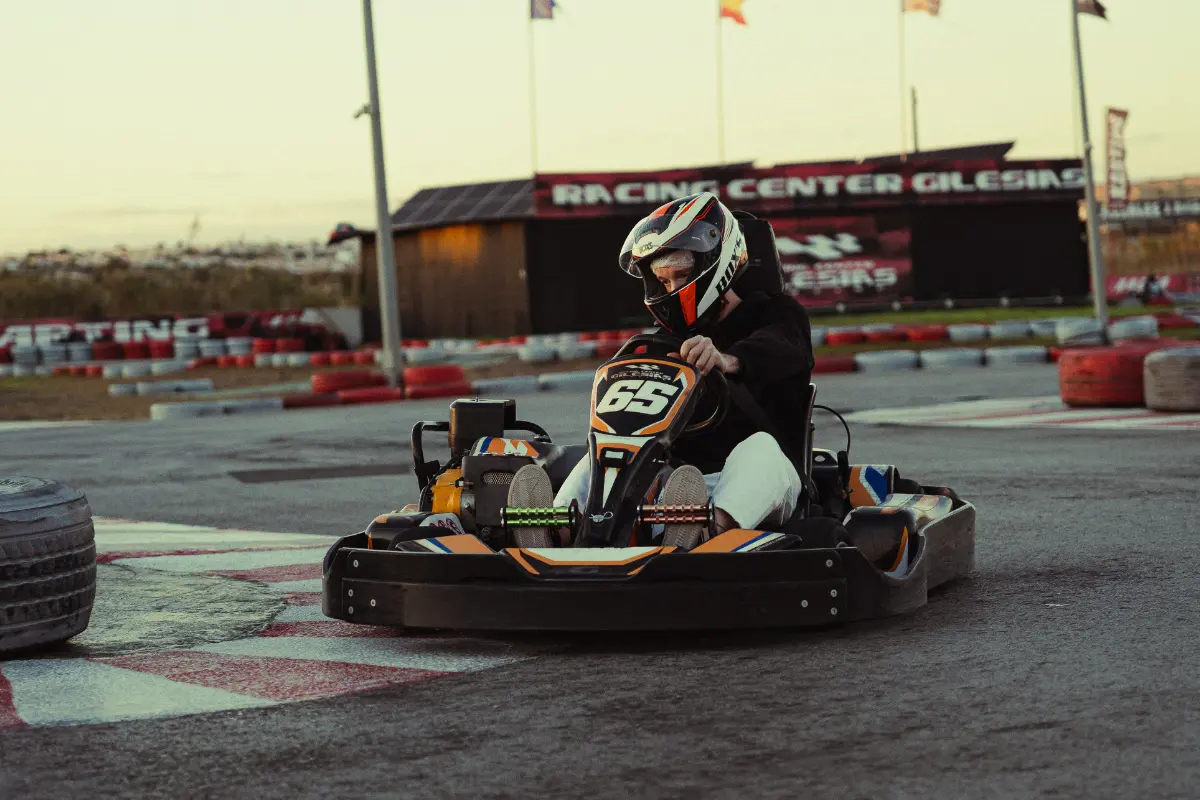
- Timing: a detection loop in the track, a decoder and transponders on the karts.
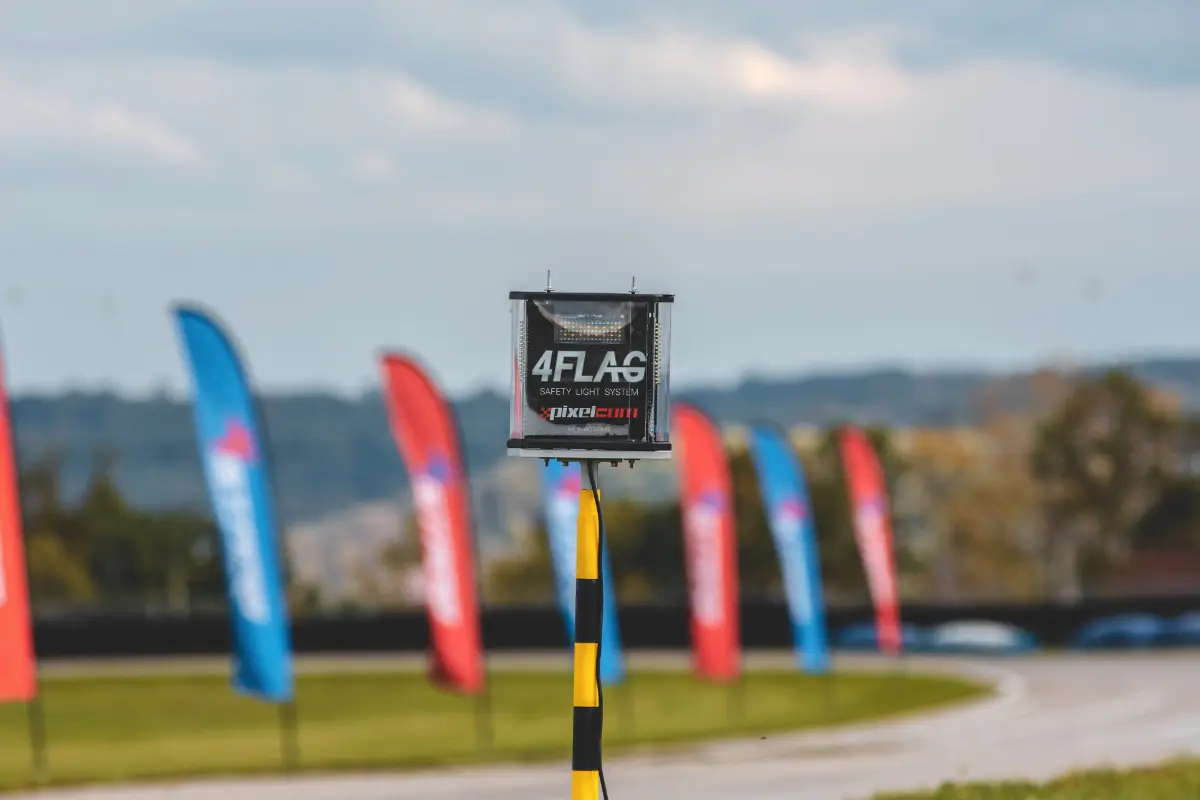
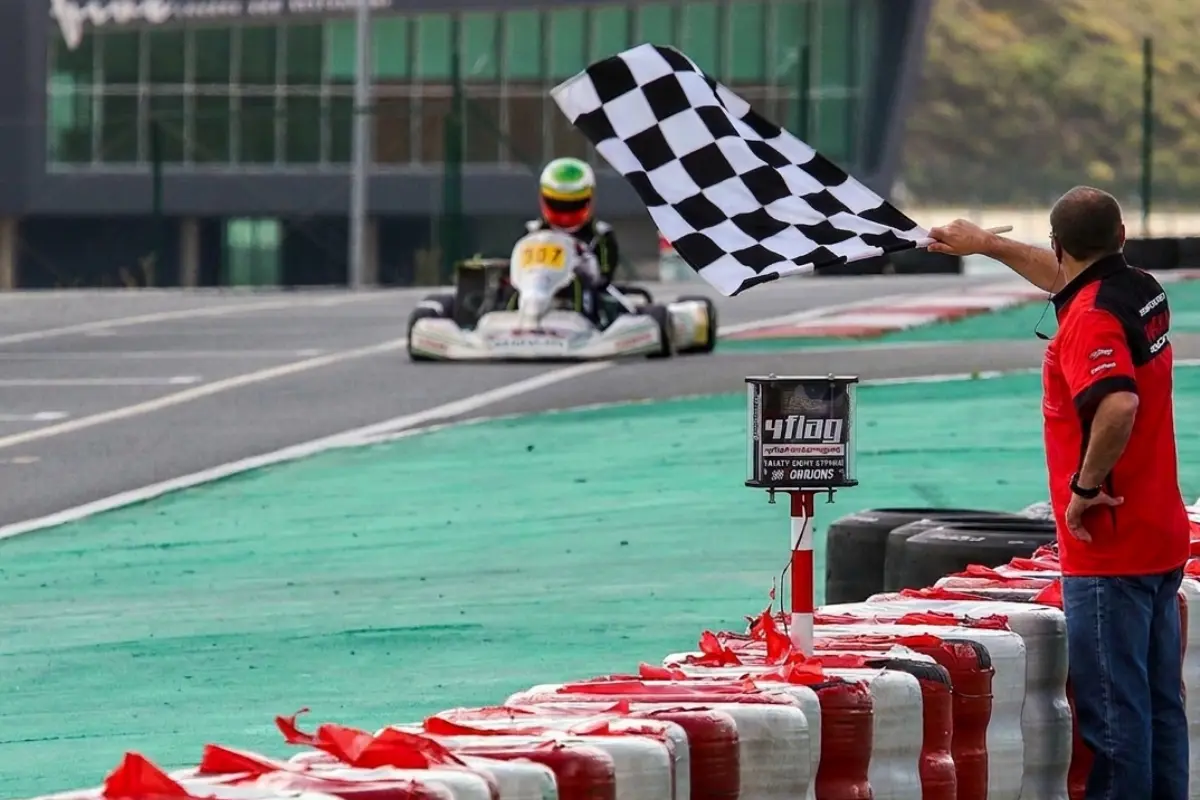
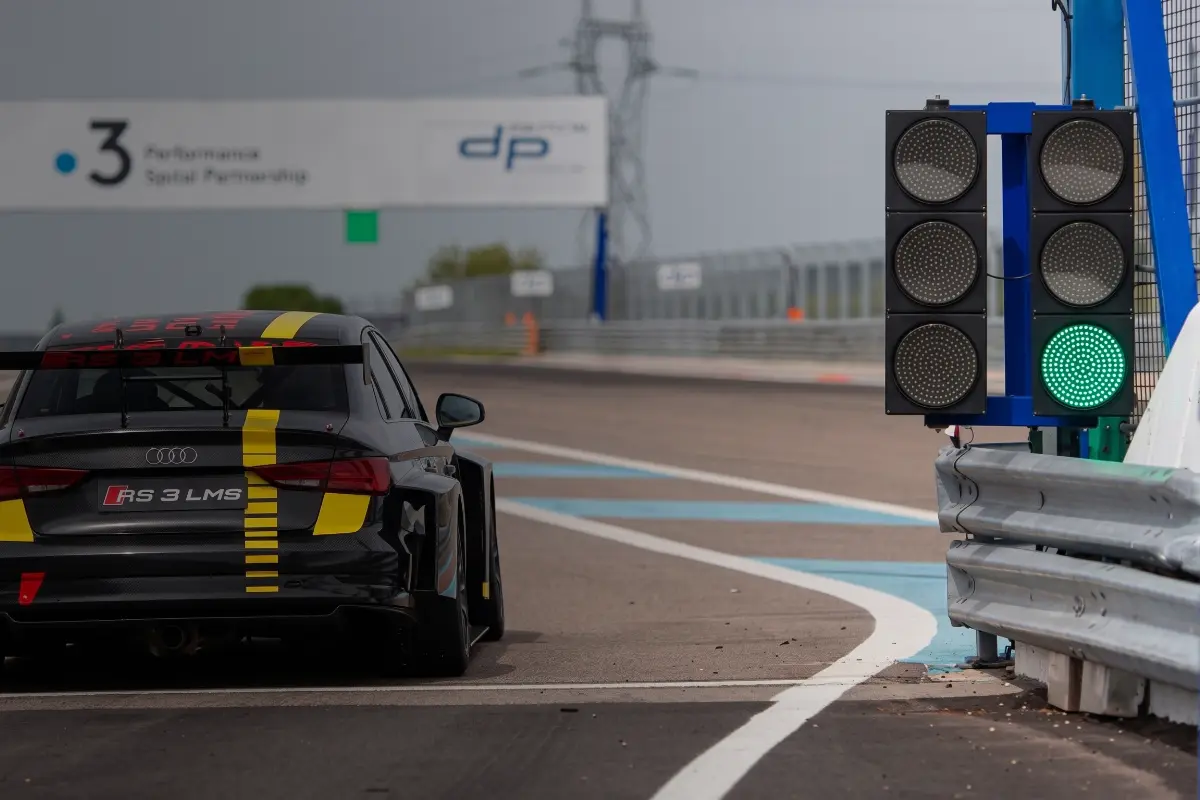
- Signalling: starting lights and electronic flags visible from the whole track.
- Speed control: a shutdown system and automatic speed limitation with the yellow flag.
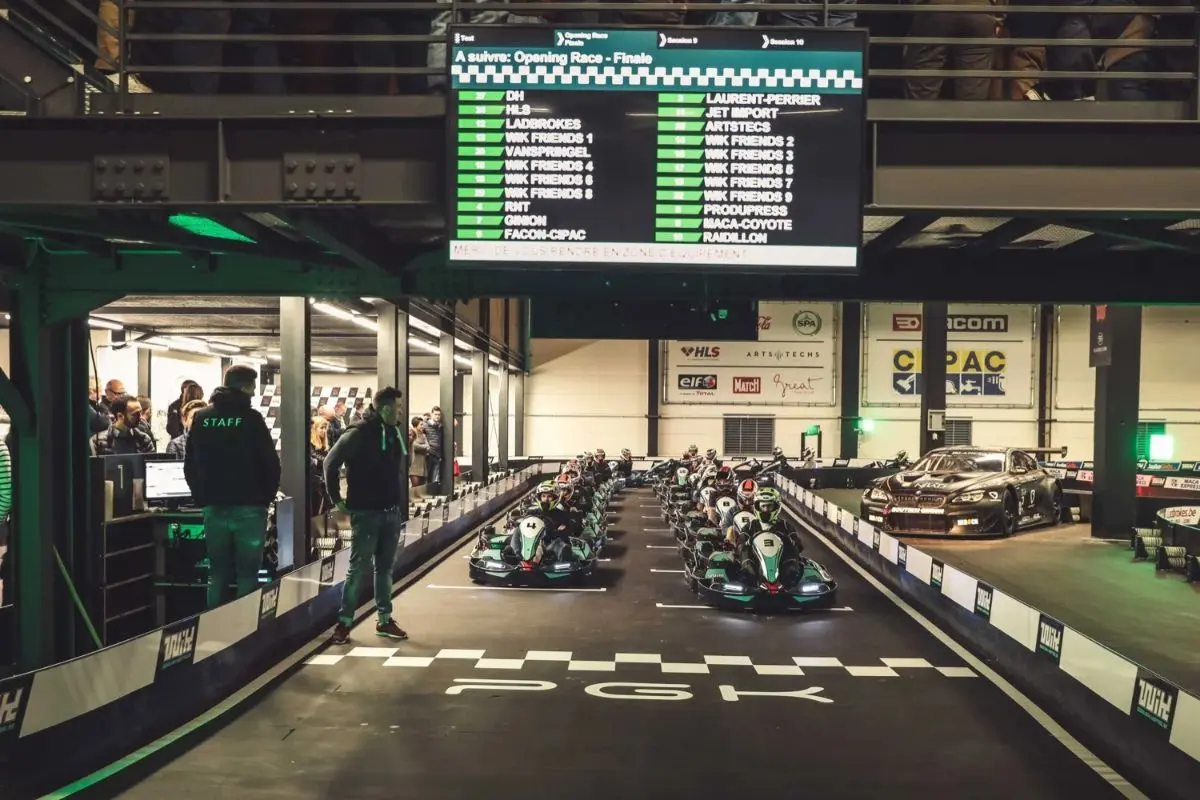
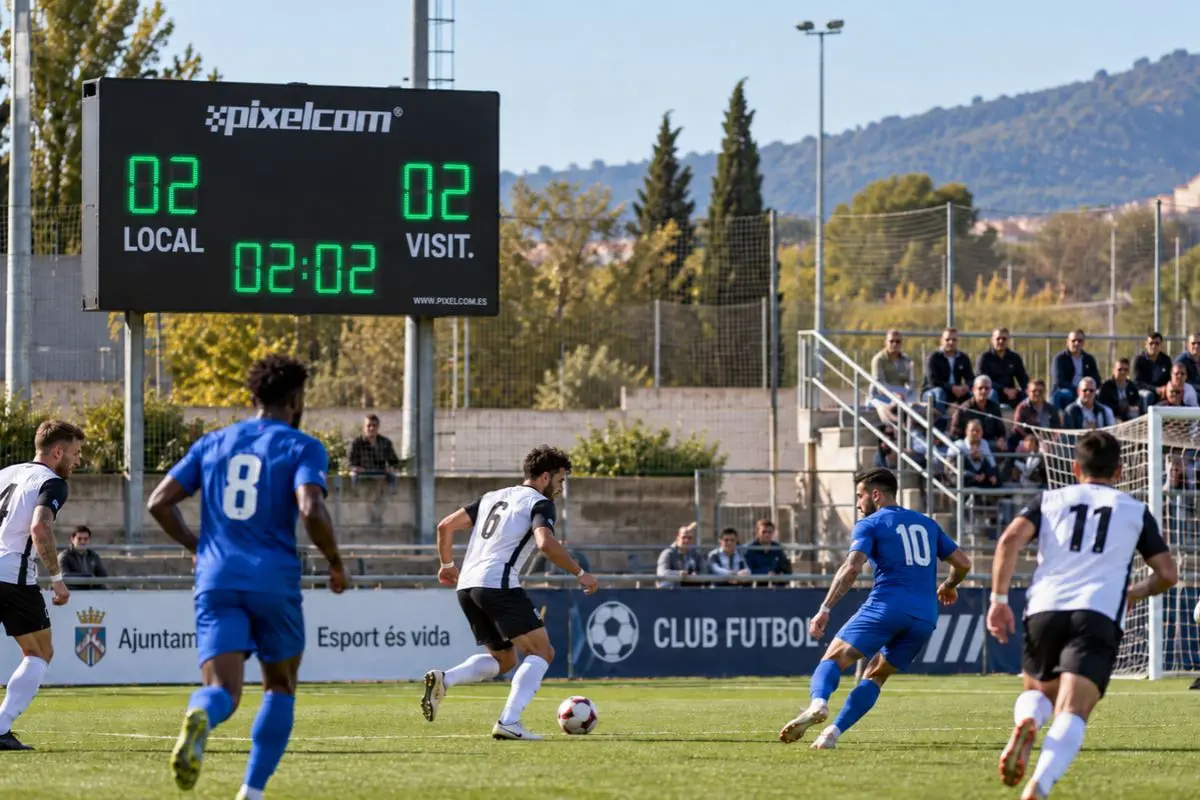
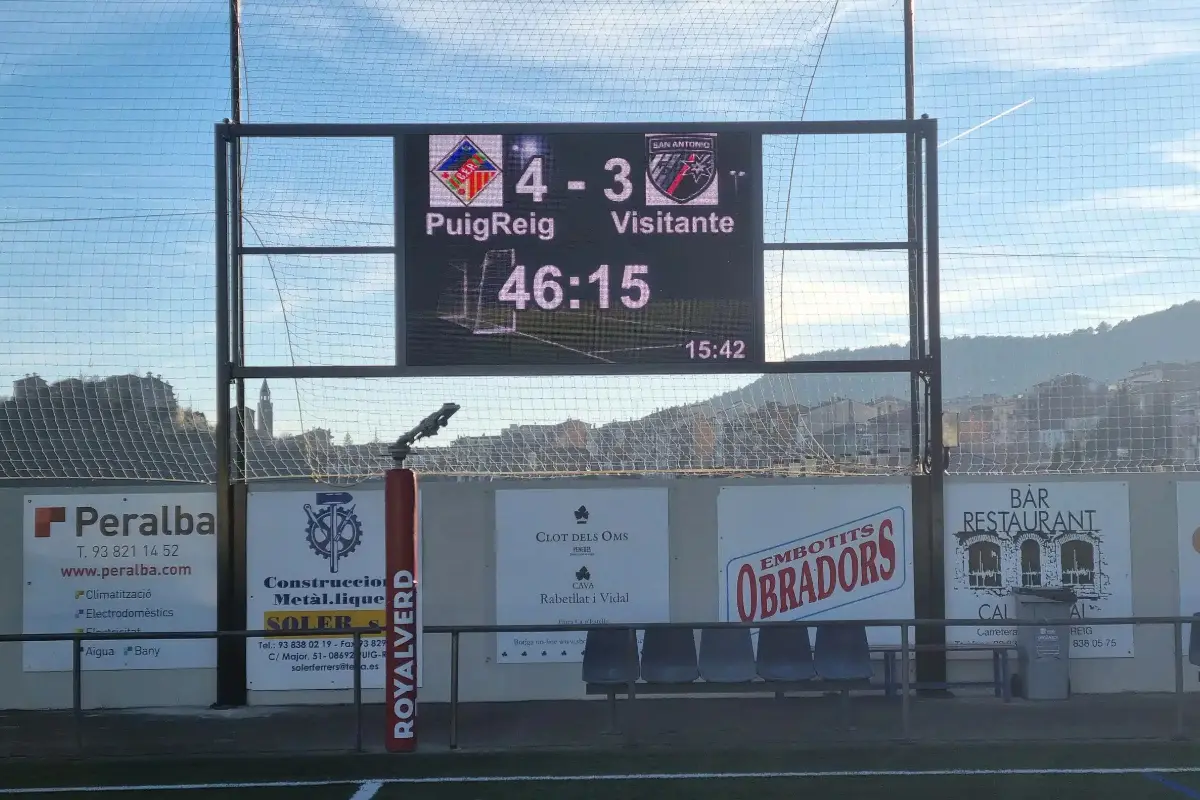
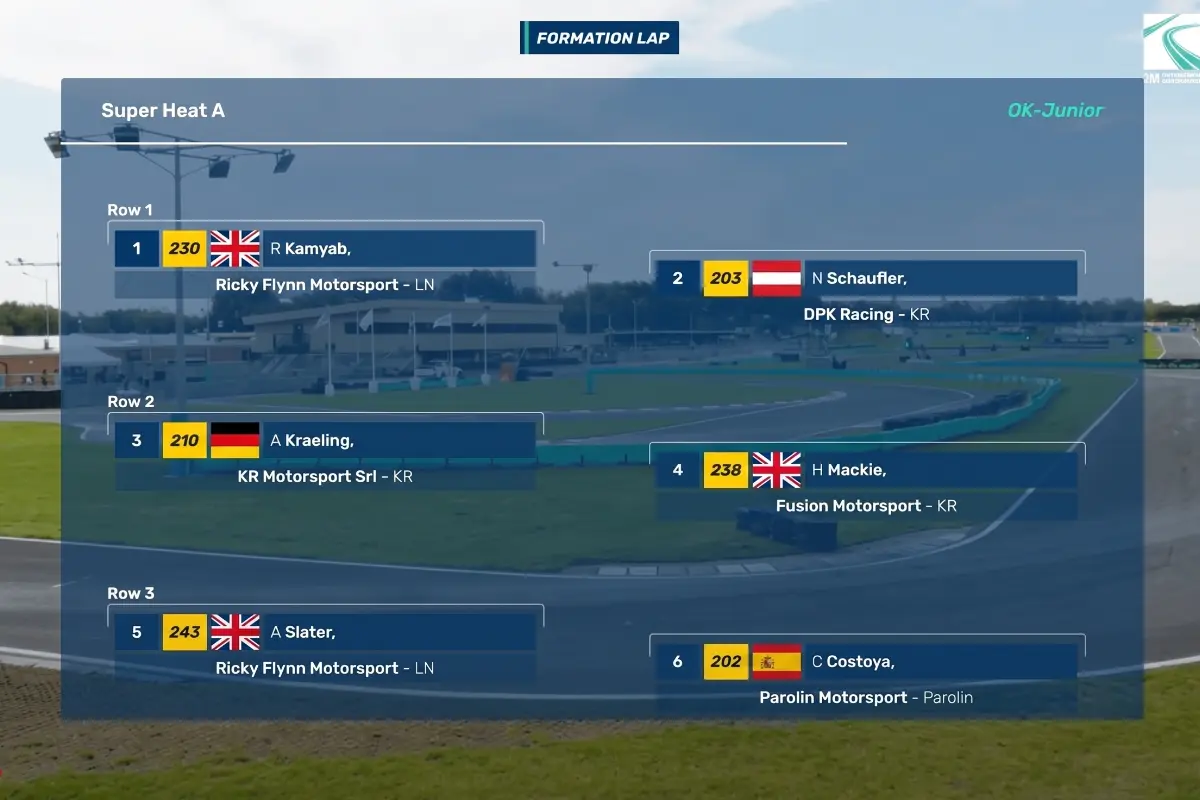
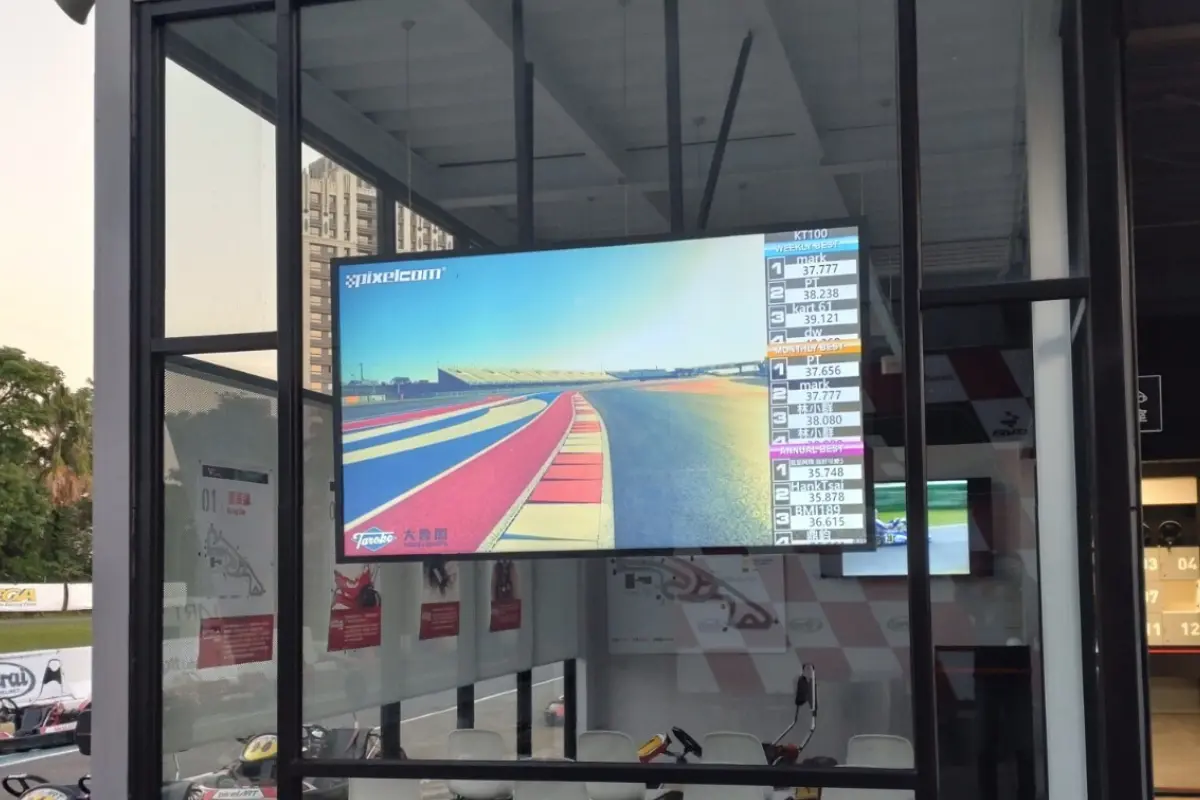
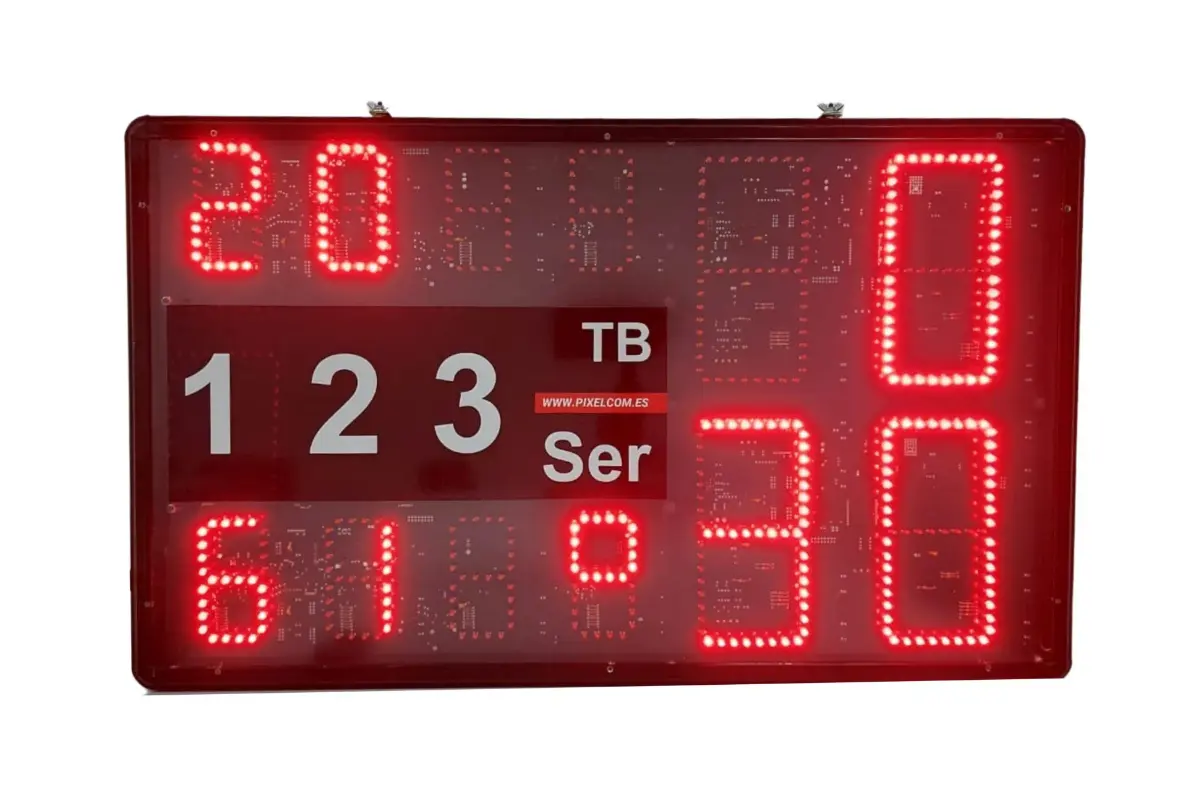
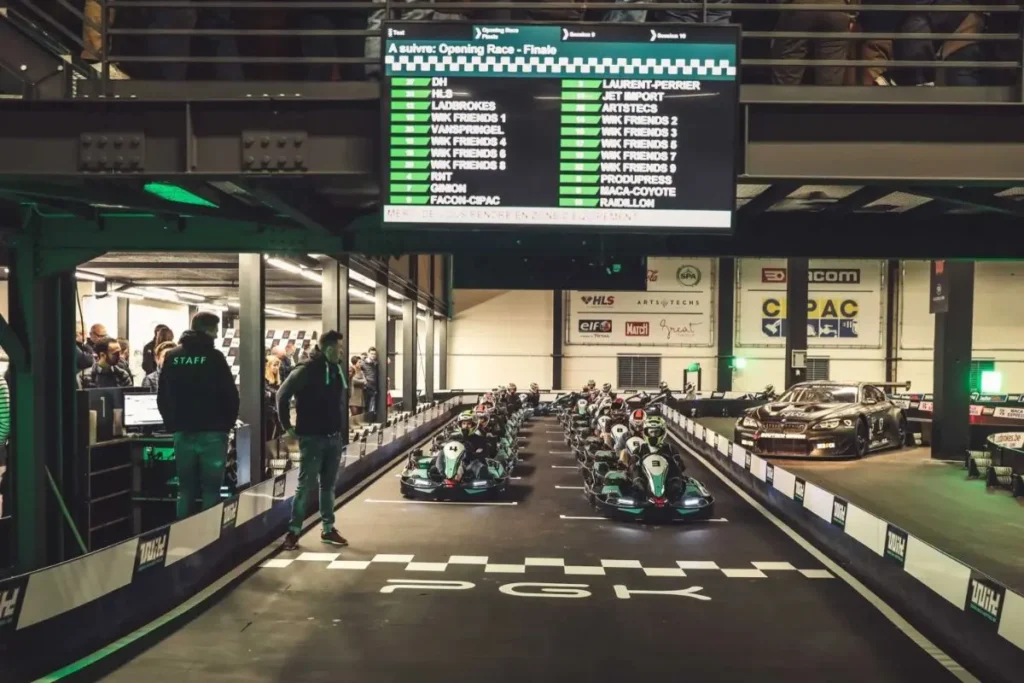
- Screens: live timing, TV software, video scoreboards and a podium.
- Front desk and sales: bookings, driver registration, point of sale and the safety briefing.
- Network and tech room: where the system lives, and what happens if the internet goes down.
Timing: the loop is decided on the plan, not afterwards
Timing needs a detection loop installed in the asphalt at the finish line and connected to the base station decoder. Every kart carries a transponder that the loop picks up on each lap.
What you need to plan is the route: from the loop to wherever the decoder will sit, usually the control room or reception. If the duct is in place before the final layer of asphalt, later installation is much easier. If not, the finished surface has to be cut.
Also fix the final position of the finish line early. Moving it later means moving the loop.
Designing a new track or refurbishing one? We review your project and show you where to allow for timing, signalling and kart control before the works start. Tell us about your project and we will ask you for the plan.
Signalling: lights and flags visible from every corner
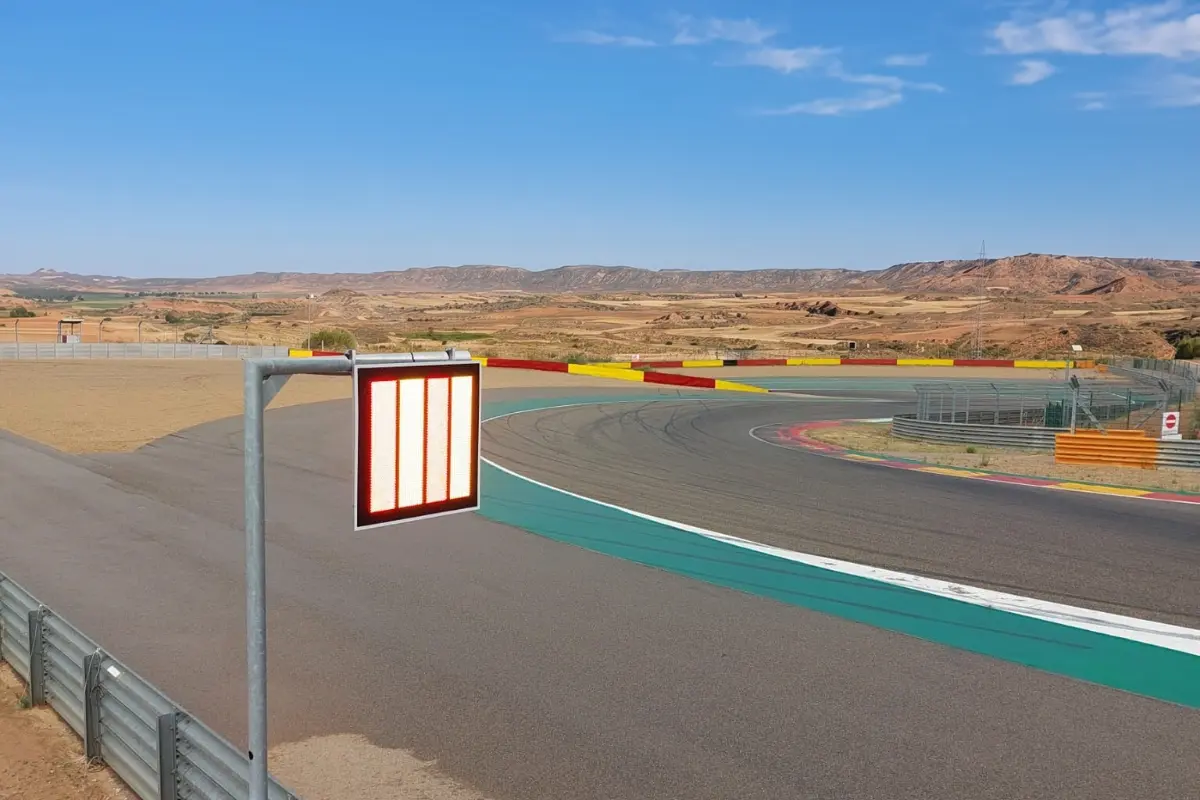
Starting lights and electronic flags only protect drivers if they see them in time. That is why their position is decided with the layout in front of you: after blind corners, along long straights and at the pit entry.
Each signalling point needs power and, depending on the equipment, a link to the control room. Drawing them on the plan lets you run the installation around the perimeter during the same works, instead of adding it over the barriers later.
Kart speed control and safety
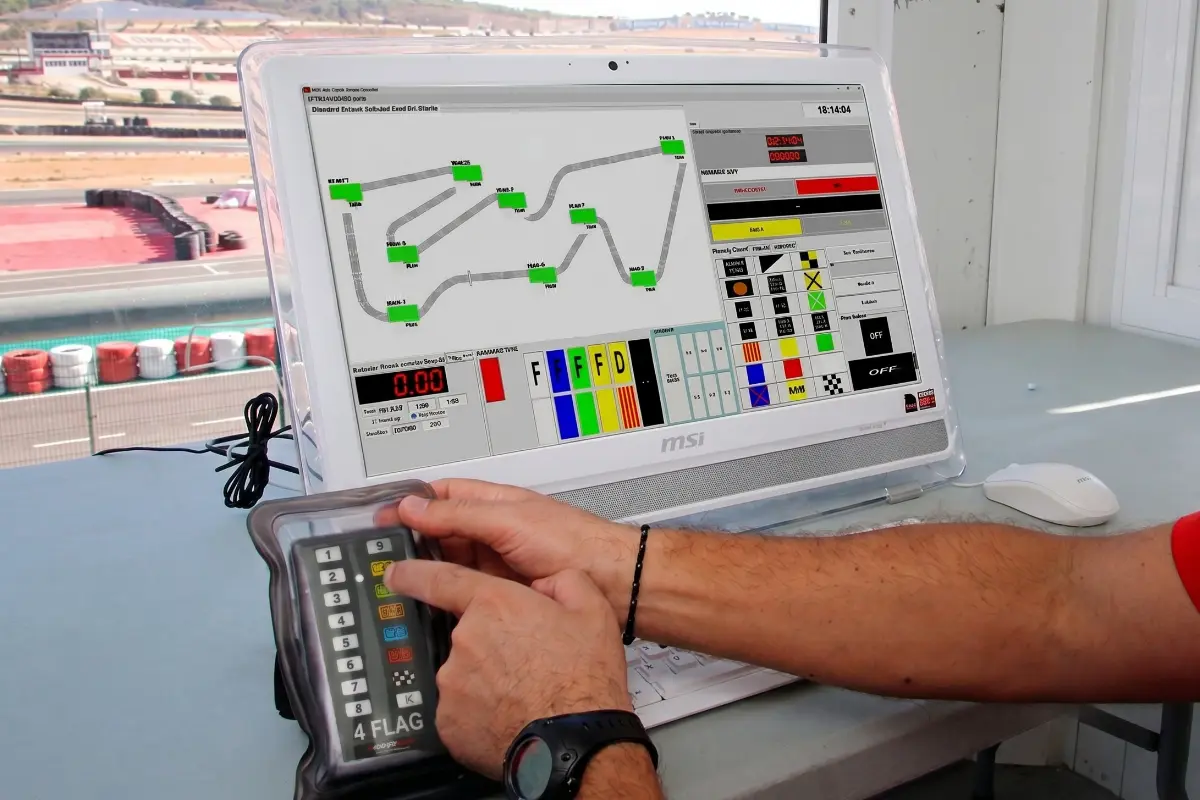
Speed control lets you slow down or stop the karts from the control room, across the whole track or by sector. It turns signalling into immediate action on track.
With automatic speed limitation from Pixelcom, activating a yellow flag limits the speed of karts as they enter the affected sector, and they recover it when they leave. The system also helps control speed in specific areas, such as the pit entry and exit. Each kart carries its own shutdown hardware, compatible with petrol and electric fleets, and staff can also act from a remote control.
In the design, define those sectors: where speed is reduced, where the pits are and where staff can see the whole track to act. For the system to know where each sector starts and ends, plan detection points at its limits, with a beacon and a loop. Like the finish line loop, their position and ducting must be on the plan before paving.
Automation does not replace marshals: it takes repetitive tasks off their hands so they can focus on the track and on customers.
Screens: what customers see while they wait for their session
Screens are part of the experience and part of the business. They show live times, rankings, the next session and, if you want, advertising.
When you design the building and the track, decide where each screen goes: waiting area, stands, reception and podium. Each spot needs power and a video feed from the system. A screen added later ends up where the cable reaches, not where customers look.
Front desk and sales: the circuit starts before the track
How many sessions you run per hour depends on the track, but also on how fast customers get from the door to the kart. Design that route the same way you design the layout.
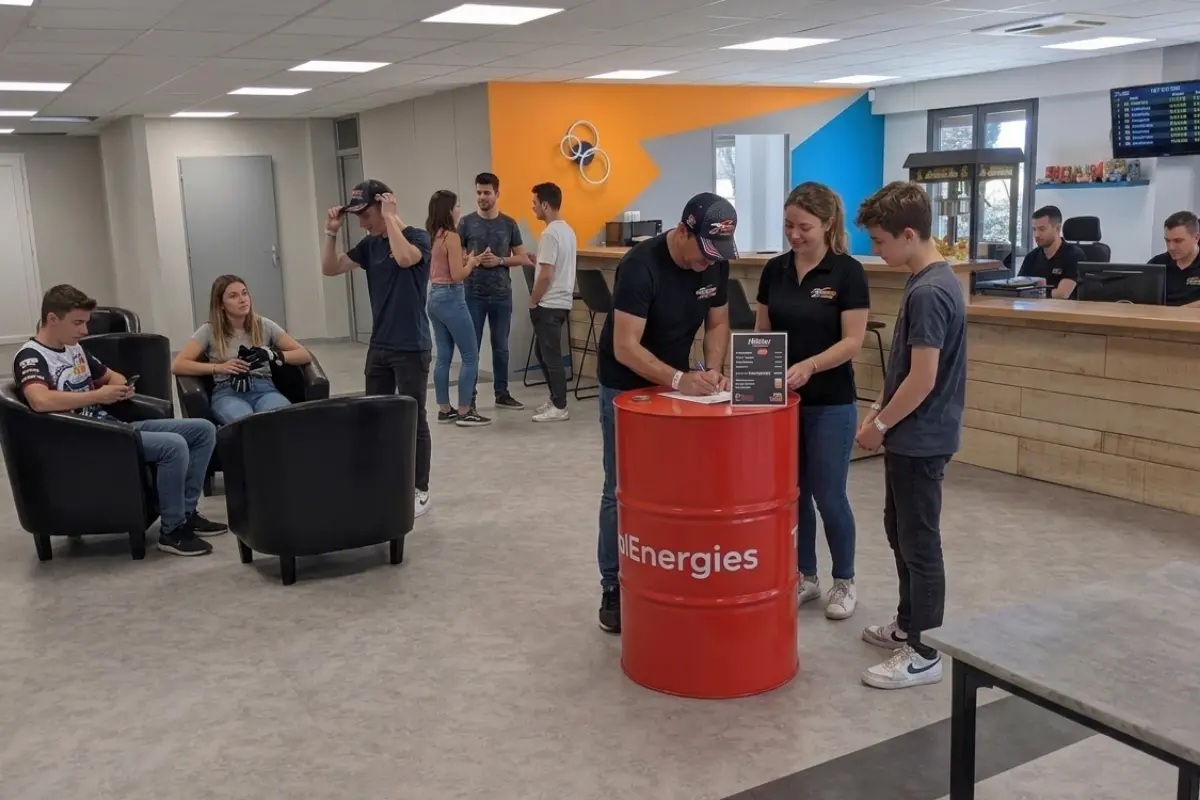
A typical flow, which varies with each track’s business model: customers book online, register and sign the waiver before arriving or at a kiosk, pay at the point of sale, watch the safety briefing video and go out on track. Each step takes space and equipment: a counter, a kiosk, a briefing screen. Online services, such as online booking and registration, take part of the queue away from the counter.
Network and tech room: what happens if the internet goes down on a Saturday?
Everything above connects through a local network and a tech room that holds the decoder, the server and the track electronics. Give it space, ventilation and protected power.
The key design question is what depends on the internet. With a system that runs in local mode, core functions such as timing, driver registration and sales can keep running even if the connection drops. Which functions stay available depends on how each installation is configured.
Checklist: is your go kart track ready for the technology?
Before you close the plan and start paving, check that the decisions that shape the technology installation have been made:
- Is the final position of the finish line and the detection loops defined?
- Are the reduced-speed sectors and their entry and exit points identified?
- Are the ducts and connections for lights, flags and screens planned?
- Are the spaces for the front desk, pits and control room defined?
- Does the tech room have space, ventilation, protected power and a local network?
- Has the compatibility of the systems with your kart fleet been checked?
If any of these questions is still open, now is the time to review it with your technology supplier.
When should you contact a karting technology supplier?
Before the construction plan is closed. At that point, moving a loop or a screen costs a line on a drawing, not building work on the track.
At Pixelcom we review your project and show you where each element goes: timing, signalling, speed control, screens and front desk, with hardware and software from the same manufacturer. Tell us about your track and we will go through the plan with you.
Go kart track design FAQ
Can timing be installed on a track that is already paved?
Yes, but the surface has to be cut to fit the loop and then resealed, and the cable has to reach the decoder. Planning it before paving avoids cutting a finished track.
Is the technology the same for indoor and outdoor tracks?
Pixelcom track hardware works in both. What changes is where lights and screens go, and weather protection outdoors.
Does it work with petrol and electric karts?
Yes. Timing, the shutdown system and steering wheel displays work with both petrol and electric fleets.
In what order should decisions be made?
First the layout and the finish line, which fix where the loop and the control room go. Then the risk areas and the pits, which set the lights, flags and speed sectors. Then the spectator areas and their screens, and finally the front desk and the tech room. Each decision gives the position of the next. If you are at an earlier stage, start with how to set up a karting business.